What to bring back from Brittany? A licensed Breton guide shares the most authentic souvenirs and gifts, from fleur de sel de Guérande and salted butter caramel to the striped marinière, Breton cider, and kouign-amann.
Brittany is one of those rare places that stays with you long after you leave. The wild coastline, the smell of the sea, the market stalls overflowing with handmade treasures. And when it is time to pack your bags, you will want to bring a little piece of it home. Not the usual airport gift shop kind of souvenir. The real thing.
After nearly two decades guiding travelers through this peninsula, I get the same question on almost every tour: what should I bring back from Brittany? So here is my curated guide to the most authentic, meaningful, and genuinely Breton gifts you can find, whether you are shopping at a local market, a specialty food shop, or a craft studio. I promise this list will not lead you astray.
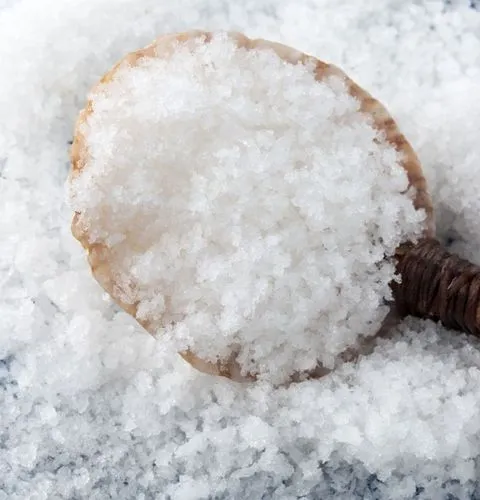
1. Fleur de Sel de Guérande: The Salt of All Salts
If you bring back only one thing from Brittany, make it this. Harvested by hand in the ancient salt marshes of Guérande, fleur de sel is the delicate top layer of crystallized sea salt, collected at sunrise by salt workers called paludiers. It has a subtle mineral complexity that transforms any dish it touches.
Look for it at local markets, specialty food shops, or directly from the salt marsh cooperatives. Opt for small artisan producers rather than supermarket versions when you can, because the difference in quality is noticeable. Some producers also offer smoked fleur de sel or versions blended with local seaweed, both excellent choices.
Insider tip: Guérande salt is protected by a Label Rouge certification. The real thing always mentions Guérande or Loire-Atlantique on the packaging. If you want the full story of how this salt is harvested and what makes it genuinely different, I wrote a dedicated guide to fleur de sel de Guérande.
2. Caramel au Beurre Salé: Brittany’s National Obsession
Salted butter caramel is practically Brittany’s national obsession, and for good reason. The combination of local butter, Guérande salt, and slow-cooked sugar produces something entirely different from the caramel you know at home.
You will find it in two main forms: soft caramels (fondants), which melt on the tongue and travel well if kept cool, and hard caramels (durs), which last longer and are ideal for carrying home in a suitcase. Beyond the classic, look for flavored versions such as caramel with buckwheat, salted caramel with sea lavender, or dark chocolate-coated caramels. Artisan confiseries throughout the region make their own signature versions, and no two taste quite the same.
Worth seeking out: small houses specializing in handmade caramels, often found at the covered markets in towns like Quimper, Dinan, and Rennes.
3. Tinned Fish and Fish Soup: The Breton Cannery Tradition
If there is one souvenir I tell almost every client to make room for, it is a stack of beautifully tinned Breton fish. Brittany has a long and proud canning tradition, the conserverie, born in the 19th century in the sardine ports of the Atlantic coast. Today it produces some of the finest tinned seafood in the world, and the tins themselves are often little works of art worth keeping long after the contents are gone.
The most famous name is La Belle-Iloise, founded in Quiberon in 1932 and still canning there today. Their boutiques, with walls stacked floor to ceiling in colorful tins, are a destination in their own right. But they are far from alone. Look also for La Quiberonnaise, Connétable, Gonidec, Courtin, and Les Mouettes d’Arvor, each with its own house style.
What to bring home:
- Sardines in olive oil, the classic. The best are prepared by hand and, like good wine, are meant to be aged for a year or more, the flavor deepening as the tin rests.
- Tuna and mackerel rillettes, rich, spreadable, and perfect on fresh bread for an effortless aperitif.
- Breton fish soup, the soupe de poisson, sold in jars and ready to heat, traditionally served with croutons, grated cheese, and a spoonful of rouille.
- Tartinables, the small jars of fish spreads flavored with seaweed, tomato, curry, or piment d’Espelette, ideal for gifts because they are light and travel without any risk.
These keep for years unopened, they survive a suitcase without a problem, and they carry the taste of the Breton coast better than almost anything else on this list. Buy them at a cannery boutique, a covered market, or a good épicerie fine rather than a supermarket, where the artisan ranges rarely appear.
4. The Marinière and the Breton Ciré: Wearing the Atlantic
The striped marinière is one of the most iconic pieces of French fashion, and it was born right here in Brittany. Originally worn by Breton sailors, the navy-and-white striped jersey has become a timeless wardrobe staple loved around the world. But buying one here, directly from a Breton brand, is something else entirely.
Several excellent brands are based in the region:
- Armor Lux, founded in Quimper in 1938, is the most storied name. Their marinière, sailor caps, and knits are made with real craft, and the house carries the Entreprise du Patrimoine Vivant label, France’s official mark of living heritage know-how.
- Le Minor, based in Guidel, produces exceptionally high-quality striped jerseys with a loyal following among French fashion insiders.
- Mer du Nord, a smaller independent label with a contemporary take on Breton classics.
- Bout’Chou, beloved for children’s versions of traditional Breton clothing.
Beyond the marinière, consider a ciré, the traditional oilskin jacket with striped lining that Breton fishermen have worn for generations. Waterproof, stylish, and built for the Atlantic weather, it is one of the most practical and beautiful things you can bring home from this coast.
5. Cider and Lambig: Not Normandy, Not Calvados
Here is something many visitors get wrong. The apple brandy produced in Brittany is not Calvados. Calvados is a Norman product, strictly protected by its own appellation. In Brittany, the equivalent spirit is called Lambig, and it has its own distinct character: rounder, often fruitier, with a warmth that reflects the Breton terroir.
Alongside Lambig, Breton cider is equally worth exploring. Produced from local apple varieties grown in the Cornouaille region, which holds its own AOC, Breton ciders range from bone-dry and almost mineral to gently sweet and floral. They pair beautifully with galettes and crepes, and they travel well. If you want to understand why these apples are so special, I wrote more about them in my guide to Brittany cider and its apple varieties.
- Look for Cidre de Cornouaille AOC for the most protected and expressive examples.
- Lambig is typically sold in small bottles and makes a thoughtful, unusual gift for spirits lovers.
- Some producers also make Pommeau de Bretagne, a blend of fresh apple juice and Lambig, rich and amber, ideal as an aperitif.
Note: alcohol can be bought at supermarkets, but local producers and farm shops often have selections you will not find elsewhere.
6. The Gwenn-ha-Du: Flags, Magnets, and Celtic Pride
The black-and-white flag of Brittany, the Gwenn-ha-Du, is one of the most recognizable regional symbols in France. Designed in 1923 and instantly adopted as a marker of Breton identity, it appears on everything from car stickers to handwoven table linens to enamel pins.
A quality magnet, a hand-printed flag, or a small enamel piece featuring the Gwenn-ha-Du or the Triskell, Brittany’s ancient Celtic spiral symbol, makes a simple and meaningful souvenir. Look for pieces made by local graphic designers and illustrators rather than mass-produced imports, because the quality and originality are in a different league.
7. Buckwheat: The Grain That Built a Culture
Buckwheat, or sarrasin, is the foundation of Breton cuisine. It has been grown here since the 15th century and is the ingredient behind the classic galette, the savory crepe that is the region’s most iconic dish. If you want the full story of how Bretons eat, see my honest guide to Breton food. But buckwheat has moved far beyond the crepe pan in recent years.
Look for:
- Biscuits and cookies made with buckwheat flour, nutty and slightly earthy, excellent with coffee or tea.
- Buckwheat honey, darker and more intense than clover honey, with a distinctive malty depth.
- Buckwheat tea, a recent artisan product made from toasted buckwheat groats, naturally caffeine-free and deeply warming.
- Buckwheat flour itself, if you want to make galettes at home. Breton-milled sarrasin has a flavor that differs noticeably from generic buckwheat flour.
A packet of buckwheat biscuits tucked into your bag is one of the lightest, most universally appreciated gifts you can bring home.
8. The Scents of Brittany: Caramel, Strawberry, Sea Spray
Brittany has a very specific smell. Anyone who has walked along the Côte de Granit Rose at low tide, or wandered through a market in June, knows it. The good news is that a growing number of local artisans have captured those scents beautifully.
Look for candles, room sprays, and diffusers featuring:
- Caramel au beurre salé: warming, sweet, unmistakably Breton.
- Fraise de Plougastel: the famous strawberry of Plougastel-Daoulas, cultivated here since the early 18th century, is the basis for some exquisite fruity fragrances.
- Embruns marins, or sea spray: a mineral, iodine-tinged scent that evokes the Breton coast at its most elemental.
- Bruyère, heather, and genêt, broom: the floral notes of the moorland interior.
These products are best found at artisan gift shops, Christmas markets, and dedicated perfumery boutiques rather than souvenir chains.
9. Seaweed and Sea Salt Beauty Products: Thalasso in a Bottle
Brittany has one of the richest coastlines in Europe when it comes to marine biodiversity, and its seaweed has been harvested for centuries, first for agriculture and now increasingly for cosmetics and wellness. The result is an extraordinary range of skin care products rooted in the sea.
What to look for:
- Thalasso-inspired body scrubs and bath salts from local spas and artisan producers, deeply mineral and exceptional for skin.
- Algae-based face creams and serums, ideally from brands using locally harvested kombu, dulse, or sea lettuce.
- The Brume Celtique by Roellinger. Chef Olivier Roellinger of Cancale, a Michelin-starred icon, developed a line of beauty and fragrance products including this Celtic mist, which captures something close to magic in a bottle. It is one of the most distinctive and luxurious gifts you can bring back.
- Savons marins, marine soaps: handcrafted bars made with sea salt and algae extracts, beautiful both to use and to look at.
Many thalassotherapy centers along the coast sell their own product lines. Even if you are not staying for a treatment, the boutiques are open to visitors.
10. Kouign-amann: The Cake That Travels Better Than You Think
Kouign-amann, pronounced KWEEN ah-MAHN, from the Breton for butter cake, is arguably the greatest thing Brittany has ever produced. Invented in Douarnenez in 1860, it is a round, caramelized pastry made from bread dough, generously buttered and sugared, then baked until the exterior is lacquered and crunchy and the interior is layered and yielding.
The good news for travelers is that vacuum-sealed kouign-amann can be kept for at least a week at room temperature, which makes it perfectly viable as a gift or to enjoy at home. Buy from a proper bakery or specialist producer rather than supermarket versions. Some patisseries also make individual-sized versions called kouignettes, which are easier to transport and share.
The best kouign-amann in Brittany is still hotly debated. My advice: buy from a boulangerie in a smaller town where the baker makes it from scratch each morning.
11. Breton Butter Biscuits: Galettes, Palets, and the Fresh Butter Test
You cannot leave Brittany without a tin of butter biscuits, and you will find a biscuiterie in almost every town. But quality varies enormously, and once you know what to look for, you will never go back to the supermarket versions.
Start by knowing the two great Breton classics, which are often confused:
- The galette bretonne is thin, flat, crisp, and golden, with a clean snap and a deeply buttery flavor.
- The palet breton is thicker, smaller, and more tender, almost crumbly, with a richer, melt-in-the-mouth texture.
Both are built on the same trinity of Breton baking: good flour, plenty of sugar, and, above all, butter. And this is where the difference is made. The finest biscuiteries use fresh butter, beurre frais, rather than the concentrated or reconstituted butter that industrial producers rely on, and it genuinely changes everything: the aroma, the snap, the way the biscuit dissolves on the tongue. Traou Mad de Pont-Aven, whose Breton name simply means good things, is the benchmark I point clients toward, precisely because the biscuits are made with fresh butter. But many small independent biscuiteries are every bit as good, so taste before you buy whenever a shop offers a sample.
A tin of galettes or palets is one of the most reliable gifts you can carry home. It keeps for weeks, it survives the journey, and it is loved by absolutely everyone. If you want to understand why Breton butter is in a league of its own, I wrote a whole guide to Breton baratte butter.
12. Quimper Faience: Hand-Painted Breton Ceramics
If you want a souvenir that is genuinely living heritage, this is it. The faience of Quimper has been made by hand since 1690, when the first earthenware workshops were established along the river Odet, and the tradition is still very much alive today. Much like the marinière and the ciré, it is a protected craft: the historic manufacture HB-Henriot carries the Entreprise du Patrimoine Vivant label, the French state’s mark of recognition for rare and outstanding artisanal know-how.
What makes Quimper faience instantly recognizable is that every piece is painted by hand, freehand, with no stencils. The most famous motif is the petit breton, the charming figure of a Breton man or woman in traditional folk dress, surrounded by garlands of flowers and Breton blue. Plates, serving dishes, butter dishes, jugs, egg cups, and decorative pieces all carry it, and each one is signed on the base by the workshop and often by the painter. No two are ever exactly alike.
You can buy directly from the manufacture and its boutiques in Quimper, where you can also tour the workshop and watch the painters at work, which is an experience in itself. Look for the genuine Quimper mark on the base rather than mass-produced imitations. A single hand-painted plate or butter dish makes an heirloom-quality gift that will outlast almost everything else you bring home.
13. The Breton Name Bowl: A Personalized Piece of Quimper Faience
The most beloved keepsake of all comes from this same tradition. Walk into any souvenir shop or market in Brittany and you will see them lined up in rows: round, handle-less ceramic bowls, each hand-painted with a first name and the little petit breton figure. This is the bol breton, also called the bol prénom.
The personalized name bowl appeared in the 20th century and quickly became a tradition: families would offer a child a bowl painted with their own first name, used each morning for coffee, hot chocolate, or cider. It makes a wonderful gift precisely because it can be made personal. You will find bowls with hundreds of first names ready to take away, and the better workshops will hand-paint a name to order, sometimes while you wait. Look for genuine Quimper faience rather than imported lookalikes, and you will bring home not just a bowl, but a small piece of three centuries of Breton craft.
14. Celtic Jewelry: The Triskell and the Symbols of Brittany
Brittany is a Celtic land, one of the six Celtic nations, and its ancient symbols have never gone out of fashion. Local jewelers and silversmiths turn them into beautiful contemporary pieces, and a Celtic jewel is one of the most personal and meaningful souvenirs you can wear home.
The most emblematic of all is the triskell, the triple spiral that is among the oldest Celtic motifs, found carved on megalithic stones thousands of years old. Its three branches turning from a single center are often read as the three elements of water, earth, and fire, or as past, present, and future, and today the triskell has become a proud emblem of Breton identity. You will also find the Celtic knot, with its endless interlacing lines symbolizing eternity, and the hermine, the ermine that is the historic symbol of the Dukes of Brittany.
Look for these worked into silver pendants, rings, brooches, and cufflinks, sometimes set with local stones, by Breton artisan jewelers rather than mass-produced imports. A hand-finished triskell pendant is light to carry, timeless to wear, and carries thousands of years of Celtic history with it.
15. Artisan Makers: The Most Unique Gifts You Will Find Anywhere
This is perhaps the category I feel most strongly about. Brittany has an extraordinary density of independent artisan creators, many of whom sell directly from their workshops or at local markets. These are the gifts that cannot be replicated, the ones that will prompt the best stories when you get home.
What you might find:
- Hand-thrown pottery inspired by Breton coastal colors: slate grey, sea green, sandy white.
- Woodwork and carved objects using local woods, sometimes incorporating Breton motifs and Celtic knotwork.
- Handwoven table linens and textiles in Breton patterns, made on traditional looms.
- Illustrated prints and linocuts by local artists, capturing Breton lighthouses, harbors, and heathland.
- Handcrafted soaps, balms, and botanical products made by herbalists using local plants such as seaweed, heather, and sea lavender.
The best way to find these makers is to visit the covered markets, especially on market days, typically twice a week in most towns, look for the Produit en Bretagne label, or ask your guide. I always steer my clients toward the artisans I know personally, because the experience of meeting the maker is part of the gift itself.
A Few More Things Worth Considering
- Sel de Guérande soap: the same legendary salt, now in bar soap form, made by small-batch producers. A perfect stocking-filler.
- Bigouden lace and embroidery: if you come across traditional Bigouden lace work or embroidery from the far west of Finistère, buy it without hesitation. It is increasingly rare and genuinely extraordinary.
- Breton table runners and placemats, screen-printed or woven with coastal landscapes and traditional motifs, are practical, beautiful, and unmistakably regional.
- Breton music: the Celtic harp and bombarde are at the heart of Breton musical tradition. A recording by a local group such as Alan Stivell or a contemporary bagad, a pipe band ensemble, makes an unusual and meaningful souvenir.
Frequently Asked Questions
What is the most popular souvenir from Brittany?
Salted butter caramel and fleur de sel de Guérande are the two most popular souvenirs from Brittany, closely followed by the striped marinière jersey and kouign-amann. All four are authentically Breton, easy to find at local markets, and travel home well.
Can you bring kouign-amann home on a plane?
Yes. Vacuum-sealed kouign-amann keeps for at least a week at room temperature, so it travels well in a suitcase or carry-on. Buy it from a proper bakery rather than a supermarket for the best quality.
What food can you bring back from Brittany?
The best Breton foods to bring home are fleur de sel de Guérande, salted butter caramels, tinned fish and fish soup from a Breton cannery such as La Belle-Iloise, buckwheat biscuits and honey, kouign-amann, Breton cider and Lambig, and butter biscuits such as Palets Bretons. Most are non-perishable or vacuum-sealed and easy to transport.
Is the marinière really from Brittany?
Yes. The navy-and-white striped marinière originated as Breton sailors’ clothing along the Atlantic coast. Buying one from a regional brand such as Armor Lux or Le Minor, both based in Brittany, means you are getting the genuine article.
Where is the best place to buy authentic Breton souvenirs?
Covered markets on market days, artisan workshops, and small specialty shops are far better than airport or tourist-strip stores. Look for the Produit en Bretagne label and, when possible, buy directly from the maker.
One Final Word
The most authentic souvenirs from Brittany are rarely found in airports or tourist shops. They come from the hands of people who live here, who make things here, who are proud of what this peninsula produces. Slow down, visit the markets, talk to the makers, and let yourself be surprised. That is, after all, the whole point of traveling.
On my private tours through Brittany, I take this personally. I know the salt marshes of Guérande, the family confiseries, the artisan studios, and the bakers who still make their kouign-amann by hand each morning. If you would like to bring home something truly Breton, I would be glad to show you where to find it. You can reach me through the contact page to plan your tailor-made tour.
Belinda C. | BELLIDAYS Travel Tours | #ThroughALocalEye